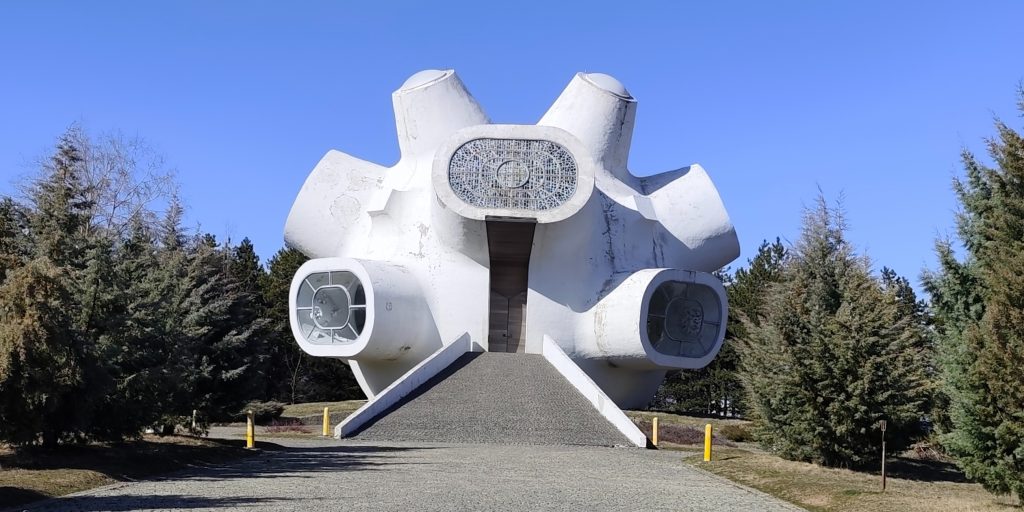
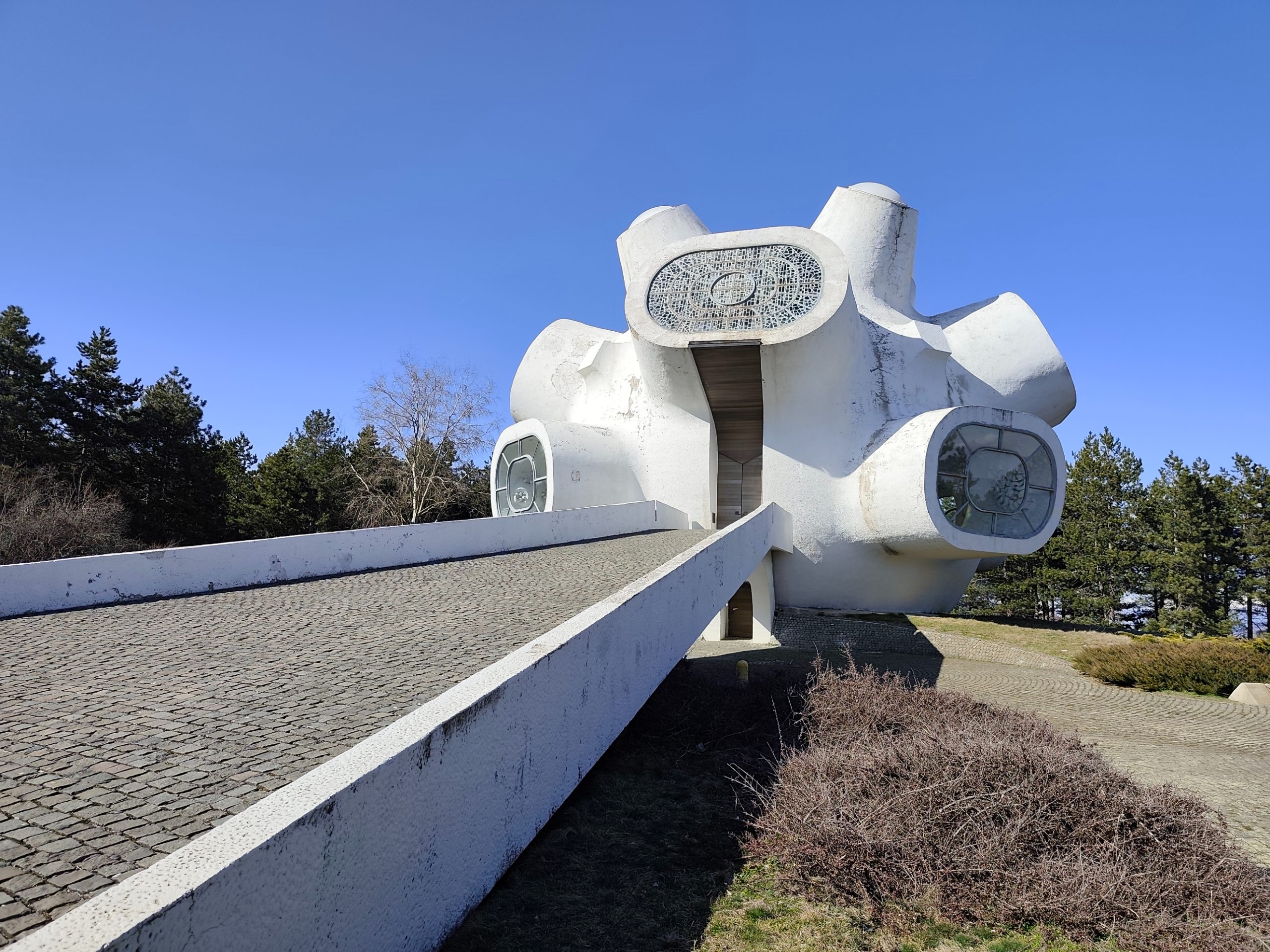
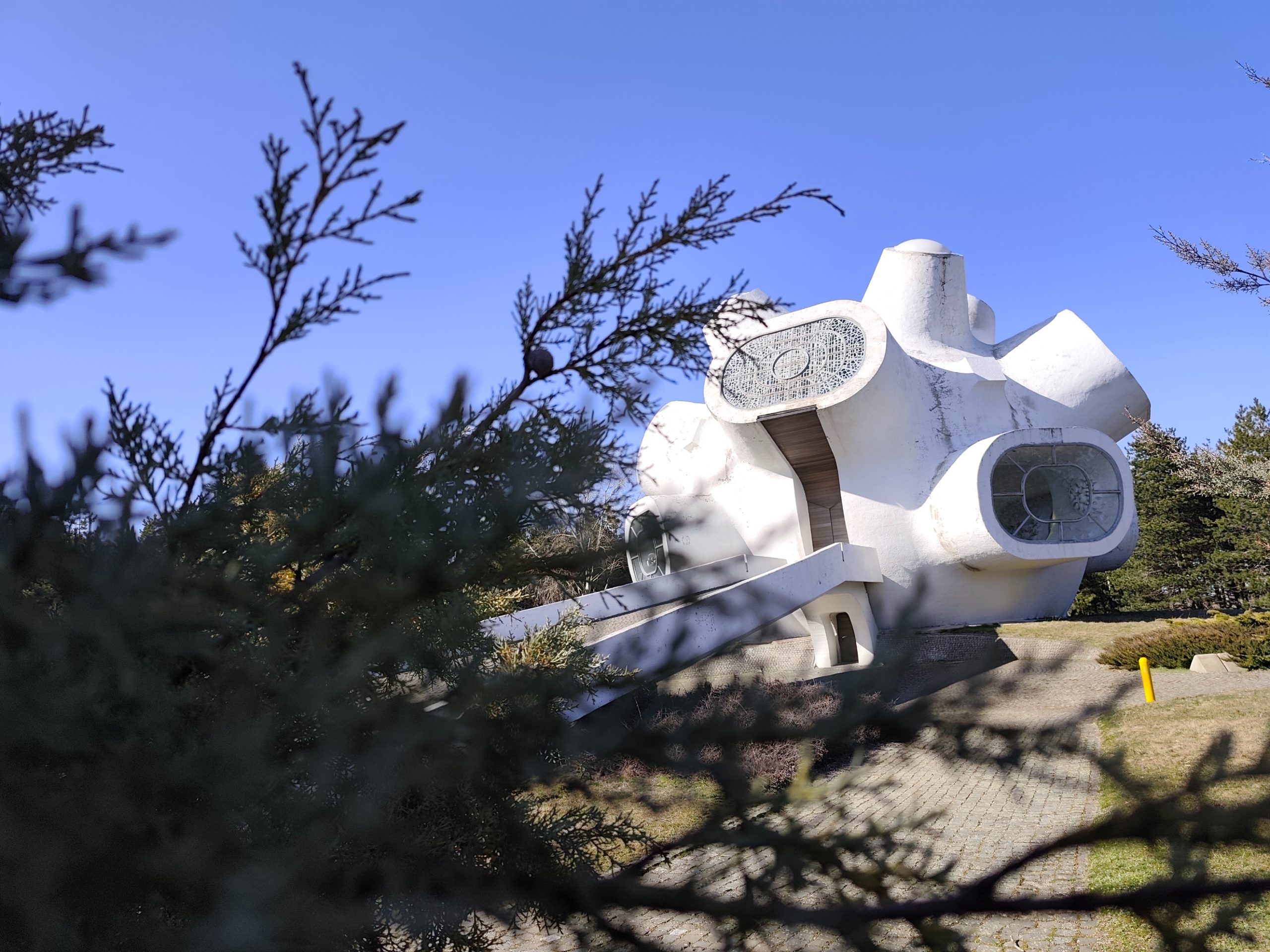
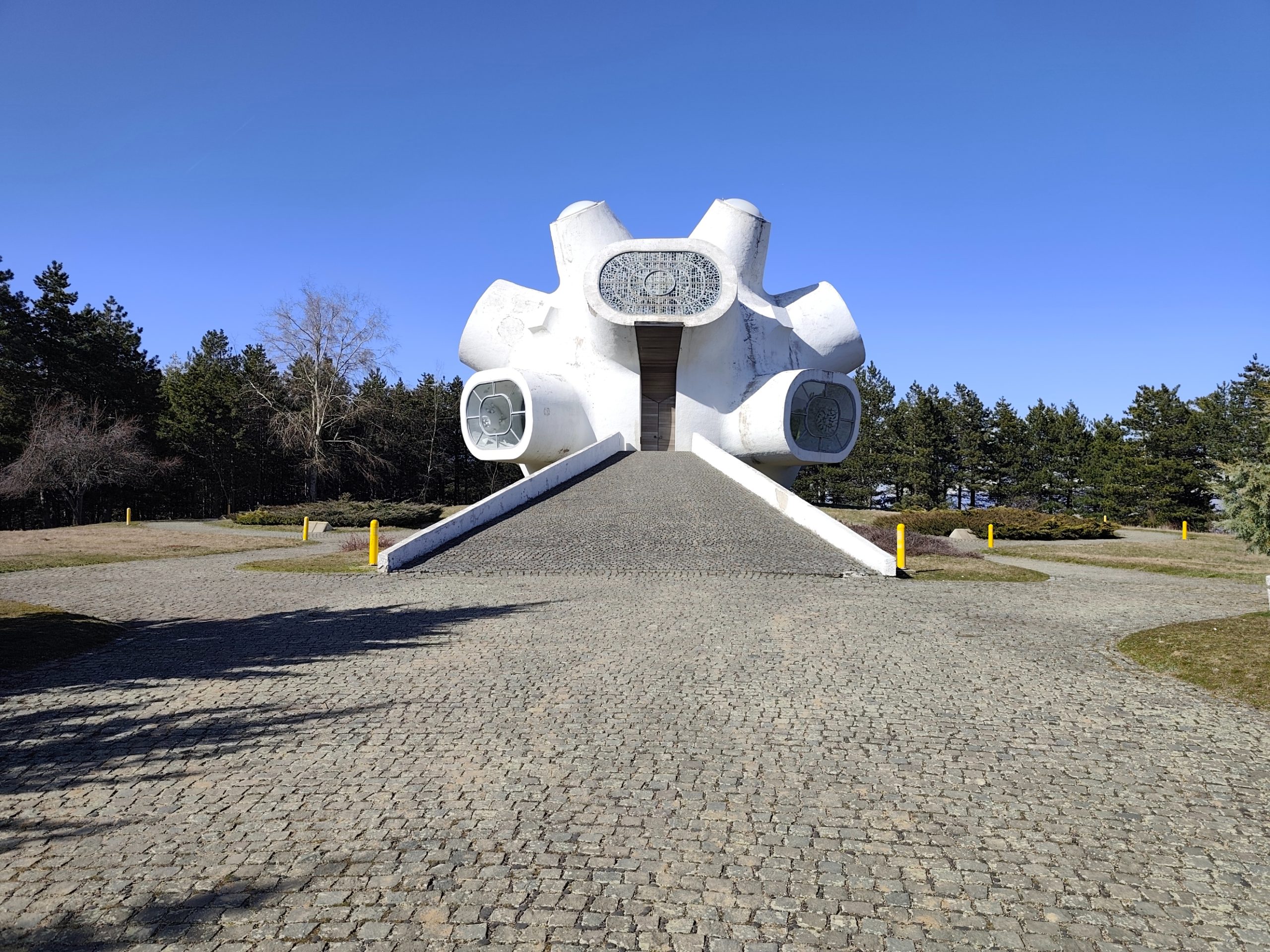
The Ilinden Monument was inaugurated on August 2, 1974. Designed by Jordan and Iskra Grabuloski, it stands as a symbol of defiance, the struggle, and the eternal aspiration of the Macedonian people for national freedom. Its location on Gumenje is deeply symbolic, as it was the strategic base of the Krushevo Revolutionary District’s leadership, headed by President Nikola Karev, during the ten days of the Republic’s freedom.
Symbolic and Aesthetic Design
The artistic journey through the monument complex begins with five broken chains, representing the end of five centuries of Ottoman rule in Macedonia.
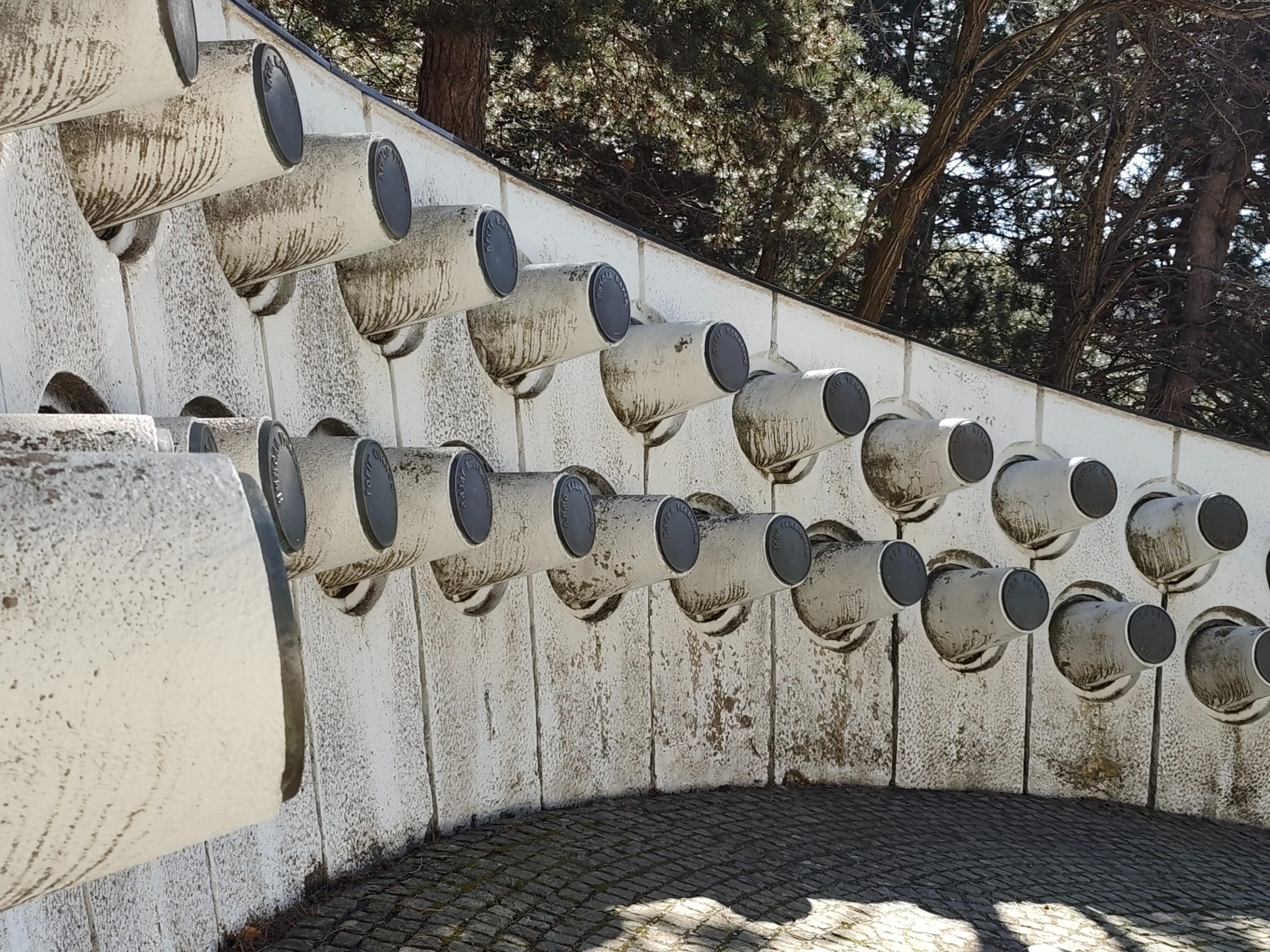
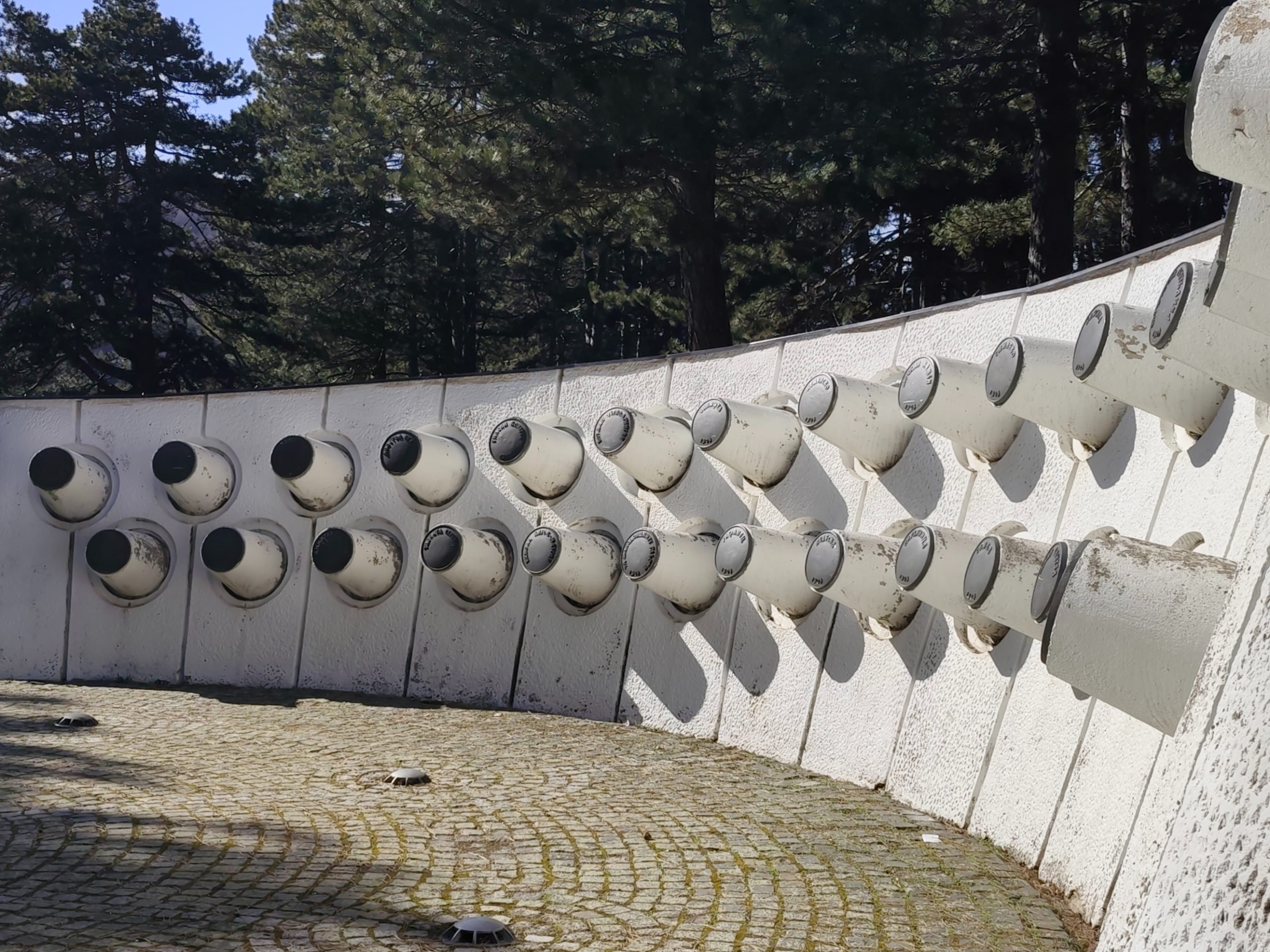
The path continues to the tomb-crypt, which houses 58 cannon barrels inspired by the legendary cherry-wood cannon. Each barrel serves as a symbolic grave, inscribed with the names of the most significant revolutionaries, events, and dates from the Ilinden period.
The Amphitheater and the Mosaics
The third platform, known as “The Stage” (The Classroom), features vibrant porcelain mosaic art on two wing-shaped walls. Created in London in 1974 based on motifs of Macedonian folklore, this masterpiece by the painter Petar Mazev marks the area where history lessons are held today. Historically, this was the exact location of the revolutionary headquarters and the President’s office during the uprising. It is also the site of the barracks where the Krushevo Republic was proclaimed and where the first cherry-wood cannon was tested.
The Dome (Functional Sculpture)
The complex culminates in the iconic dome at 1,320 meters above sea level. Shaped like a mace (bozdogan), it is the final resting place of the President of the Krushevo Republic, Nikola Karev (1877–1905). His cubical tomb is placed between galleries that represent the two Ilindens: 1903 and 1944.
The dome features 12 openings, eight of which are galleries. Through artistic reliefs and the solemn sounds of the oratorio “Sun of the Ancient Land” by Dr. Toma Proshev, these galleries chronologically present Macedonia’s cultural, historical, and spiritual wealth—from the National Awakening and the Ilinden Uprising to the National Liberation War (WWII), ASNOM, and the sunrise of today’s freedom.
Structural Composition
The monument composition is divided into four sections. The first three stages serve as “Propylaea” (a monumental gateway) leading to the final part—the “functional sculpture,” a spherical architectural masterpiece.
The first series of openings in front of the four galleries directs the viewer’s gaze toward the four cardinal points, revealing different views of the city and the surrounding landscapes where pivotal historical events unfolded. Inside the galleries, the walls are adorned with eight reliefs in white cement, aesthetically capturing the essence of the Macedonian struggle.



 Location: Gumenje – Nikola Karev St. 62, Krushevo.
 Opening Hours: Daily, 09:00 AM – 04:00 PM.
 Getting there: The monument is located at the highest point of the Gumenje plateau and is easily accessible by foot or car from the city center.